Sea Buckthorn
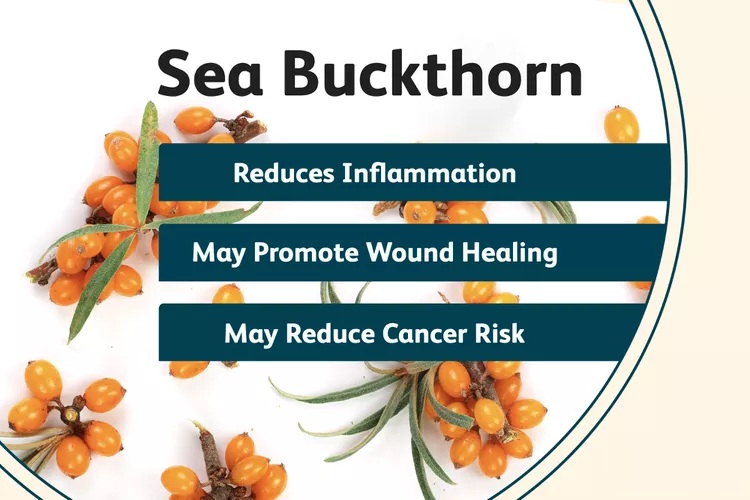
Sea buckthorn offers a variety of benefits, from treating eczema and inflammation to promoting wound healing and maintaining healthy blood sugar levels. Packed with antioxidants, this potent remedy also supports cardiovascular health and skin care, with minimal reported side effects.
1. Treatment for Eczema
Older studies have shown conflicting results when oral sea buckthorn supplements are used to help treat atopic dermatitis (eczema).
Recent studies suggest preliminary evidence that sea buckthorn may help reduce the severity of eczema.
2. Better Wound Healing
Some studies suggest that applying sea buckthorn topically may promote wound healing, especially with sea buckthorn oils.2
For example, a 2021 study of 55 people with second-degree burns compared sea buckthorn dressings favorably with the more conventional 1% silver sulfadiazine cream. The use of sea buckthorn improved healing times.3
3. Lower Blood Sugar
A 2021 trial found that consuming sea buckthorn puree for five weeks slightly decreased fasting blood sugar. However, the study only included 38 participants with pre-diabetes or impaired glucose regulation4
A small study of 18 participants assigned male at birth suggested that sea buckthorn berries decreased and delayed the insulin response after eating.5
The antioxidant components of sea buckthorn are thought to be responsible for its potential blood sugar-lowering effects.6 Overall, the research in this area has been limited, and more comprehensive studies are needed.
4. Reduced Risk of Cancer
According to a short review, sea buckthorn’s antioxidant and anti-inflammatory components are thought to have anti-cancer properties.7
However, the review points out that the research thus far has been done on animals or in vitro (in a test tube). Human trials are needed before the potential anti-cancer effects of sea buckthorn in humans can be confirmed.
5. Improved Skin and Hair Care
A 2017 review reported various skin uses of sea buckthorn. According to the review, topical sea buckthorn may theoretically be helpful in the following ways:8
- Moisturizing the skin
- Easing irritation
- Treating acne
- Healing aging-related damage
- Hair care, including hair loss
The review notes that sea buckthorn’s antioxidants and fatty acids are valuable for skin care. Antioxidants help remove free radicals, reducing aging signs, while fatty acids provide moisture.8
6. Reduced Inflammation
Studies have explored the potential benefits of sea buckthorn in treating inflammation. Plant chemicals called phenolic acids (among the polyphenols) are found in sea buckthorn seeds.9
Research has shown that these compounds play a key role in fighting inflammation and oxidative stress in the body. The fruits also contain antioxidant properties.10
7. Improved Cardiovascular Health
Sea buckthorn may offer benefits in treating high blood pressure and high cholesterol.11 These cardiovascular (heart-related) conditions are common but pose major health risks.
A review of 11 studies on sea buckthorn found a pattern of cholesterol level improvements in people who had a history of high cholesterol or non-alcoholic fatty liver disease (NAFLD), now called metabolic dysfunction-associated steatotic liver disease (MASLD). The same benefits were not seen in healthy people.12
Sea buckthorn is also a source of healthy omega-6 and omega-3 fatty acids that can help prevent cardiovascular diseases, including high blood pressure.1314
8. More Effective Weight Loss
An animal study suggests that polysaccharides in sea buckthorn help to activate brown fat and improve thermogenesis (burning calories) in the body. Researchers say that this effect inhibits the accumulation of fat and weight gain.15
For this reason, scientists who study buckthorn suggest that sea buckthorn powder should be developed into functional foods or supplements for people with obesity. However, to date, studies have only been conducted on rodents, so more studies in humans are needed to determine this potential benefit.
9. Potential Anti-Viral and Anti-Microbial Treatment
Preliminary studies suggest that sea buckthorn has antimicrobial and antiviral effects in the body. These benefits may have several implications for use.
For example, very preliminary in vitro studies suggest sea buckthorn berry and leaf extract may inhibit the growth of Methicillin-resistant S. aureus, also known as MRSA, but effectiveness in humans is unknown. Other researchers have used a buckthorn-based mouthwash to reduce bacteria in the mouth that can contribute to periodontal disease.
Another preliminary in vitro study found that isolated chemicals from a sea buckthorn extract slowed down the growth of herpes simplex virus (HSV-2) in a lab setting. Clinical trials are needed to understand if it’s a treatment option for HSV-2.15
10. Better Eye Health
Some limited studies suggest that sea buckthorn may be able to relieve certain eye problems, including dry eyes and age-related macular degeneration (specifically light-induced retinal degeneration).16
Scientists believe that antioxidants in sea buckthorn oil naturally help to protect the eyes from oxidative stress and inflammation, thereby improving the health of the eyes.16
11. Relief From Vaginal Dryness
Some research suggests that sea buckthorn supplements may help relieve vaginal problems such as itching, redness, dryness, vaginal discharge, odor, infection, pain, and difficult urination.
In a study involving about 40 women over the age of 45, all of the study participants reported relief from their vaginal problems (vaginal redness, vaginal odor, vaginal itching, and vaginal dryness) after 12 weeks of taking a branded sea buckthorn supplement (500 milligrams of sea buckthorn oil).17
It should be noted, however, that the company that manufactures the supplement funded the study.
12. Better Gut Health
Preliminary research suggests that the polyphenols in sea buckthorn may have a protective role in the gastrointestinal tract. Scientists believe that the polyphenols improve nutrient absorption and metabolism by regulating the intestinal flora in the gut.18
Researchers are quick to point out, however, that more human trials are needed to fully understand the way that sea buckthorn interacts with the gastrointestinal system.
13. May Help Protect the Liver
A few limited studies have suggested that sea buckthorn may help reduce fat (lipid) accumulation in the liver and potentially may be helpful in the treatment of non-alcoholic fatty liver disease (NAFLD). The potential prebiotic activity of polysaccharides in sea buckthorn is credited for this possible benefit.19
Several older studies have investigated the potential use of sea buckthorn for the treatment of cirrhosis. While the findings looked promising, more current studies are needed to fully understand this potential use of the supplement.20
Showing the single result